



Vegetable garden: Tips and tricks for keeping vegetables and other plants happy
Is your garden off to a good start? Awesome! Now you just need to take care of it so that your vegetables, herbs, and fruit can fully mature. In addition to basic care, such as watering and fertilizing, here are a few habits you should adopt to ensure your harvests are ample and satisfying.
Give your plants a drink using collected rainwater
Gardening in Quebec accounts for 30% of our drinking water consumption each summer. Why not use rainwater instead for your watering needs? Rainwater is usually not as hard as tap water, does not contain chlorine, and is always the same temperature as the ambient environment—that’s why plants greatly prefer it.
While there are advanced (and expensive) systems for efficiently collecting rainwater, a rain barrel is all you need to collect a sufficient, or at least significant, quantity of water for one garden. Simply connect the barrel to your gutters, add a filter to remove large particulate matter, and you’re all set. Another advantage to having your own reservoir is being able to use it whenever you want, even when municipal restrictions on watering are in effect.
Tomato and other plants: Maintenance that makes a difference
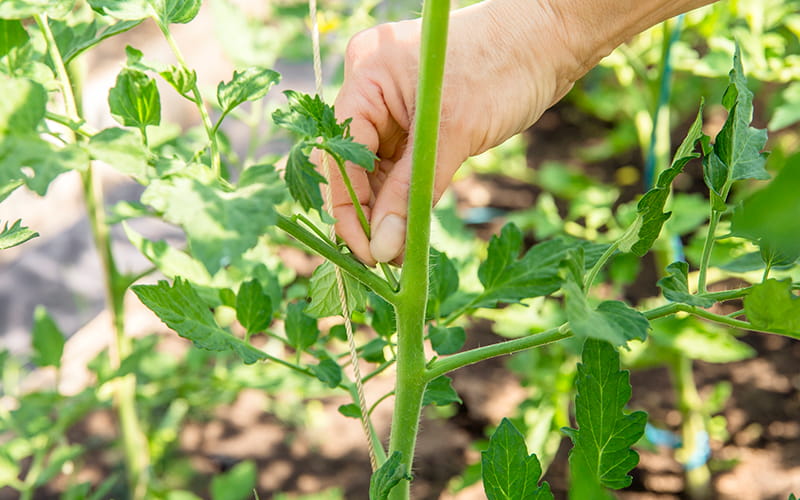
The vast majority of plants don’t need any special care to produce beautifully crunchy, juicy produce. But there are some exceptions! With tomatoes, for example, it’s best to cut off stems that will not produce fruit, as well as any growth between two stems. This habit of pinching back will allow the plant to focus its energy on growing tomatoes.
For other herbs, such as thyme, rosemary, dill, cilantro, mint, sage, and tarragon, simply cut off the stems you want to harvest at the base, which should maintain the basic shape of the plant. Note, however, that you cannot cut back more than one-third of the plant at any given time.
How should basil and other herbs be harvested?
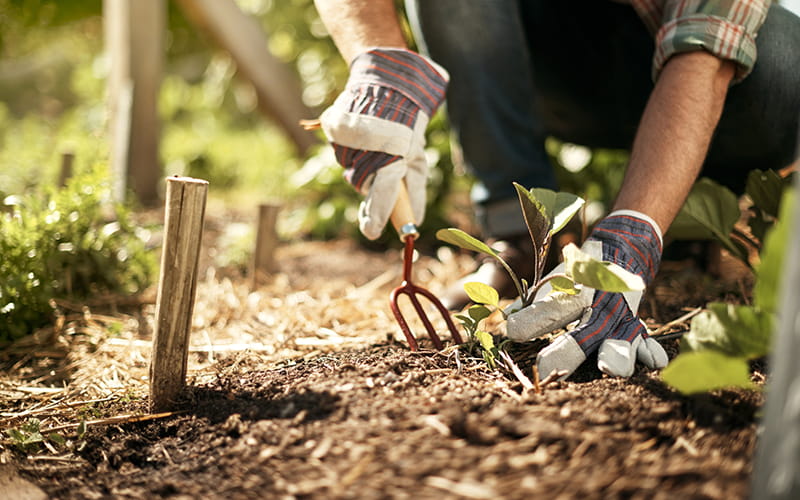
To ensure your basil keeps growing despite occasional trims, cut the largest leaves at the top of the plant, close to the stem. Do not cut the stem itself until the plant is almost 8 inches high, at which point it should be cut back to prevent it from producing flowers. Cut the stem just above a node, which is easy to identify by its firmness and lateral offshoots. This will cause the plant to branch out and become bushier.
For other herbs, such as thyme, rosemary, dill, cilantro, mint, sage, and tarragon, simply cut off the stems you want to harvest at the base, which should maintain the basic shape of the plant. Note, however, that you cannot cut back more than one-third of the plant at any given time.
Weed removal
Weeds steal nutrients from your plants. As soon as you see any weeds starting to sprout, immediately pull them out of the soil, roots and all. Weeding on a sunny day will ensure the sprouts you’ve pulled will dry out under the sun and die off completely.
Mulch: A natural advantage!
Mulch is a proven effective for a number of issues. Use it to ward off weed growth by applying a thick layer, about 3 to 4 inches thick, onto freshly weeded beds (since any remaining weeds might grow through the mulch). Opt for natural mulch that breaks down over time, such as leaves, straw, and lawn clippings, which are both economical and environmentally friendly options. “Natural cedar chips, which are easy to find in urban areas, will also work,” explains Dufresne. However, avoid evergreen bark chips, coloured bark chips, and stones (such as river rock or lava rock).
Make sure not to smother your plants. Ideally, you should wait for your plants to mature before adding mulch.
There are many advantages to mulching, such as:
- keeping soil moist and cool;
- enriching the soil;
- protecting plants from certain diseases; and
- providing better control of harmful insects.
Watch out for signs of stress
The sun is shining, you’ve provided enough water, there are no slugs, aphids, or other garden killjoys... so why are your plants looking so glum? Might they be suffering from a nutrient deficiency?
Problems
Smaller-than-normal leaves that are pale green or yellow, small-sized or low-quality fruit, or fruit that ripen too quickly are all possible signs of a nitrogen deficiency.
An interruption in a plant’s growth, purple or dark green discoloured leaf tips, slow flowering and small, acidic fruit that are few in number are all possible signs of a lack of phosphorous.
Mature leaves that dry out and curl up, brown or yellow-spotted leaves, and few or no fruit are possible signs of a calcium deficiency.
Browning of leaf edges which tend to curl up, fragile stems, and malformed buds are possible signs of a lack of potassium.
Solutions
To fix a nitrogen deficiency, reduce watering, aerate the soil, and apply an appropriate fertilizer (such as blood meal).
For a phosphorous deficiency, reduce watering and add compost (to correct the pH of the soil, which is likely too acid or too alkaline).
For a calcium deficiency, water more often (but not too much) and apply an appropriate fertilizer.
For a potassium deficiency, keep watering as you normally would and apply an appropriate fertilizer or even compost.
Be careful when self-diagnosing!
“These problems are unlikely to occur if you use good quality soil that is amended with organic material. Ask for advice from a horticultural professional if you ever face these issues. It’s important not to create more problems for yourself by trying to fix something else,” warns Dufresne.
Pro tips for bigger harvests
Reducing the space between vegetable plants means more “Yum!” per square foot!
While it’s important to leave enough space between plants that will grow a lot during the season, such as unidentified tomato plants and cucumbers, you can still plant some other veggies quite close together to maximize the space available. Such is the case with carrots, which are thin and grow vertically in the ground. If you have very fertile soil, it’s possible to sow carrots as little as 2 inches apart.
Another trick for taking full advantage of your gardening space is to plant together vegetables of different sizes which do not grow at the same rate, also known as intercropping. First plant the larger vegetables, then insert the smaller ones (which quickly mature) between them. For example, you can plant radishes or salad crops in between cabbages.