


Lunch and Dinner: 6 Winning Methods
Lunch to prepare, activities that follow one another, dinners to improvise... At the start of the school year, meals can quickly become a source of stress. But don’t panic! There are simple methods to save time, lighten the mental load and put good meals on the table, without complicating your life.
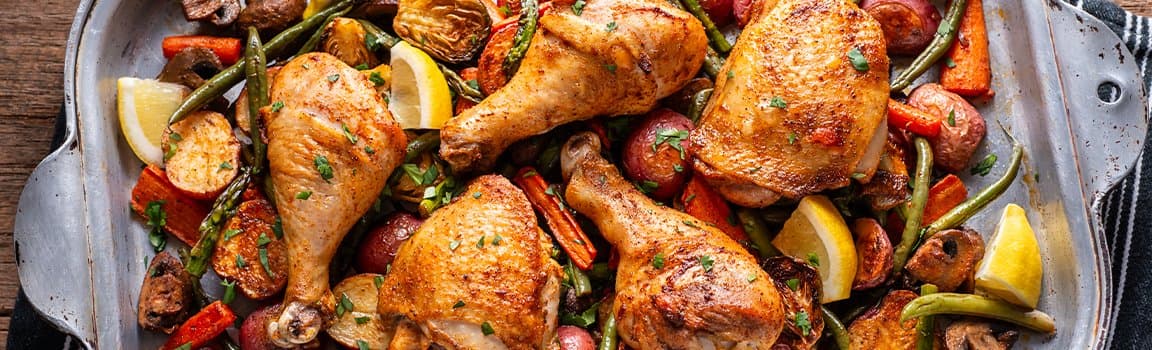
1. Sheet Pan Meals
1. Sheet Pan Meals
Group protein and vegetables on one or two baking sheets according to the required cooking times. A drizzle of oil, a few spices and the oven does the rest. As the ingredients roast, they develop toasty flavours and crispy textures, without the need to monitor multiple pans.
A Complete Meal. No need to coordinate several dishes.
The Seasons Dictate the Menu. We easily adapt the vegetables according to the arrivals of the moment.
Very Useful Leftovers. Surplus food easily finds its place in a meal salad or lunch the next day.
2. Dump Dinners
2. Dump Dinners
With this approach, everything comes together in one dish, even before you turn on the oven or slow cooker. Meat, fish, tofu, vegetables, starchy foods and sauce cook together, without additional handling. In just five minutes, the meal is ready to cook, and the ingredients in the pantry or freezer are transformed into a complete and tasty dinner.
A Lightning Preparation. It only takes a few minutes to put the meal in the oven or start the slow cooker.
Time Regained. While cooking, you can help with homework, prepare lunches or simply relax.
Endless Possibilities. Chicken, fish, tofu, vegetables and legumes all lend themselves to this method.
3. One Pot Dishes
3. One Pot Dishes
All the preparation is done in a single saucepan. Ingredients are added at the right time, and starchy foods, such as rice, pasta, or quinoa, cook directly in the broth rather than separately, allowing them to absorb all the flavours.
A Single Pan. This simplifies both preparation and cleaning.
Extra Portions. It’s easy to cook more for the next day’s lunches.
A More Serene Kitchen. Everything simmers in the same place, without having to supervise several cookings.
One Pot or Dump Dinner, What’s the Difference?
Both methods use a single container, but they work differently. The one pot usually requires a first cooking step, such as sautéing the onions or browning the meat before adding the other ingredients. The dump dinner, on the other hand, simply consists of placing all the raw ingredients in the dish before cooking.
4. Assembly Meals
4. Assembly Meals
They almost completely eliminate cooking at dinnertime. The idea is to combine ready-made ingredients, such as a rotisserie chicken, pickled tofu, pre-cut vegetables, cooked grains, or a good dressing. In a few minutes, the meal is served.
We Deal with What We Have. A great way to use up leftovers and ready-to-cook foods.
Everyone Has Their Own Meal. Everyone garnishes their bowl or plate according to their tastes.
Lunch as a Bonus. A few more portions can be prepared for the next day.
5. Soup Meals
5. Soup Meals
Economical and anti-waste, meal soups make it possible to use the vegetables waiting in the fridge, leftover proteins and legumes. From creamy chowder to minestrone, to noodle soup, they come in a variety of ways depending on the seasons and what you have on hand.
One Step Ahead. They freeze and warm up very well.
Nothing is Lost. Forgotten vegetables and leftovers easily find a second life.
Easy to Take with You. An insulated container is all you need for a comforting lunch.
6. Light Batch Cooking
6. Light Batch Cooking
You don’t have to spend hours in the kitchen to enjoy the benefits of batch cooking. The idea is to prepare more of certain foods when you’re already cooking, whether it’s rice, roasted vegetables, chicken, or chili. Over the course of the week, these basics can easily be transformed into lunches, lunch bowls, wraps or quick dinners.
Time Saved Every Day. Part of the work is already done.
Meals That Reinvent Themselves. Roast chicken becomes a wrap, chili becomes taco filling, and roasted vegetables find their place in a meal bowl.
Less Waste. The ingredients are used until the last serving.
Frictionless meals are not based on a miracle recipe, but on a few habits that simplify everyday life. By combining one or two of these methods throughout the week, it becomes easier to pack lunches, put a good dinner on the table and enjoy back-to-school evenings to the fullest.